How long does muscle soreness (DOMS) last?
Delayed onset muscle soreness, or DOMS, commonly appears 12 to 24 hours after unfamiliar exercise and peaks around 24 to 72 hours. It usually eases over the following days. This timeline is a guide; unusual, severe or worsening symptoms need a different response.
I develop Forma, which is mentioned in this guide.
In this guide
Recognise the pattern, without diagnosing yourself
The review of eccentric exercise in Frontiers in Physiology describes soreness after unfamiliar exercise, particularly eccentric work such as lowering a weight. Delayed soreness differs from pain during a repetition. Its mechanisms are complex; it is not simply retained lactic acid, nor a direct measure of muscle growth.
Use a timeline as context
| Time after exercise | Possible pattern |
|---|---|
| 12–24 hours | Delayed soreness may develop |
| 24–72 hours | Soreness often reaches its peak |
| Following days | It generally eases; duration varies with the person and workout |
What to do over the next few days
Illustrative case: after unfamiliar lunges on Monday, your thighs feel stiff on Wednesday. That timing can fit DOMS, but it does not prove the cause. Avoid forcing painful movements. Gentle activity may feel more comfortable; choose rest or a modified session if movement is restricted. Do not chase soreness as proof that training worked.
When to seek medical help
Stop training for sharp pain, unusual swelling or worsening symptoms. Severe muscle pain, weakness or dark urine after exertion warrant immediate medical attention because of possible rhabdomyolysis. A soreness timetable or an app cannot rule this out. Seek advice if symptoms persist or concern you.
Track context rather than a recovery verdict
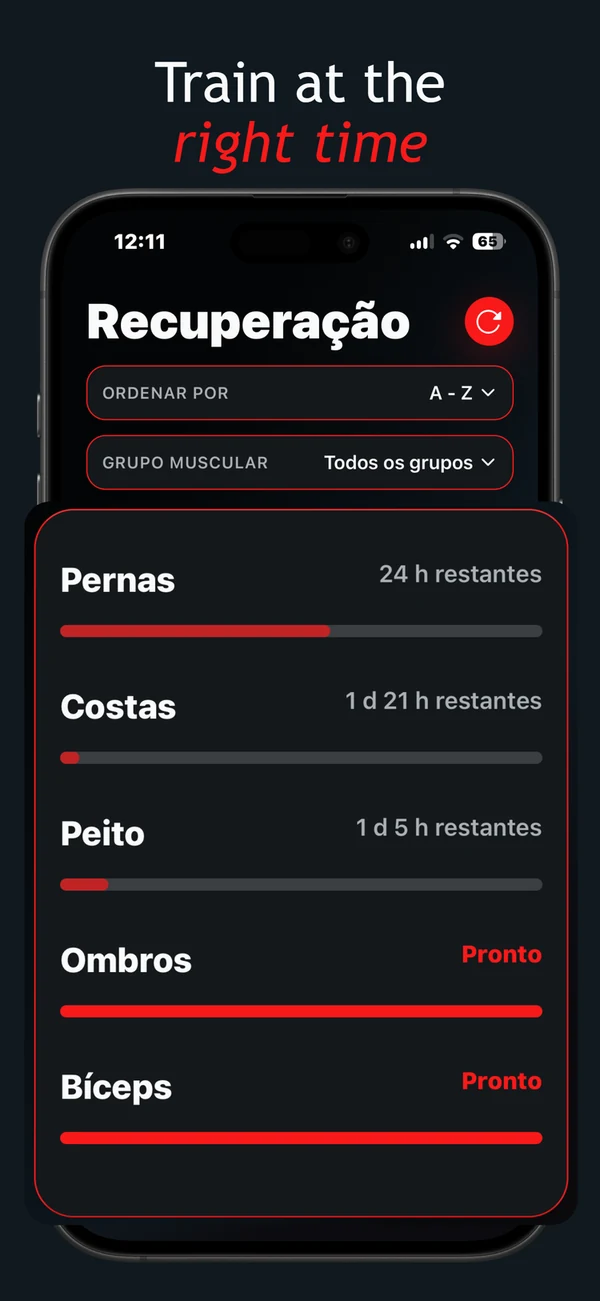
Record the exercise, workload, symptoms and whether movement is comfortable. Forma estimates recovery from logged workouts; it does not diagnose pain, measure muscle repair or clear you to train. This guide provides general information, not an individual medical assessment.
Keep a training log
Forma logs workouts and estimates recovery from recorded activity. Use it as a planning aid alongside your symptoms and training context; it cannot diagnose pain or clear you to train.
Explore FormaFrequently asked questions
Does DOMS always last three days?
No. The common peak is around 24–72 hours, but the full duration varies. Timing alone does not identify the cause of pain.
Is soreness proof of muscle growth?
No. Soreness is not a reliable measure of how effective a workout was.
What symptoms need urgent attention?
Severe muscle pain, weakness or dark urine after exercise need immediate medical assessment rather than being assumed to be routine DOMS.