How to train when you are sore
If you are sore, assess movement, range of motion and energy during a careful warm-up. Depending on how you feel, keep the planned session, reduce the workload, train another muscle group or rest. Soreness is one signal among several.
I develop Forma, which is mentioned in this guide.
In this guide
Soreness is information, not an instruction
Post-workout soreness can tell you that a muscle experienced unfamiliar or demanding work, but it does not automatically mean you must skip every session. It also does not prove that a muscle is fully ready. Treat it as one piece of context alongside movement, control, energy and pain.
Start with the planned movement
Use a gradual warm-up and pay attention to range of motion and technique. If the movement feels normal and the soreness is mild, you may choose to continue with less volume or intensity. If technique changes or the movement feels painful, switch the exercise, train another area or stop.
Adapt instead of abandoning the week
A flexible plan can preserve consistency without forcing a bad session. Move from heavy work to a lighter variation, replace a lower-body session with upper body, use mobility or take a rest day. The best choice depends on your training history and current condition, not on completing a calendar at any cost.
An example of adapting the session
Suppose your thighs are sore after unfamiliar lunges. If a careful unloaded movement is uncomfortable or changes your technique, avoid adding load to force the planned session. Rest or choose comfortable activity that does not aggravate symptoms. Feeling warmer does not prove an injury is absent. Forma’s estimates can help organise a log, but cannot decide whether pain is safe.
Limits and warning signs
This is general information, not an individual assessment. Stop for sharp, unusual or worsening pain. Severe muscle pain, weakness or dark urine after exertion need immediate medical attention. Persistent fatigue or falling performance can have causes beyond the training schedule; seek qualified advice rather than relying on an app estimate.
Keep a training log
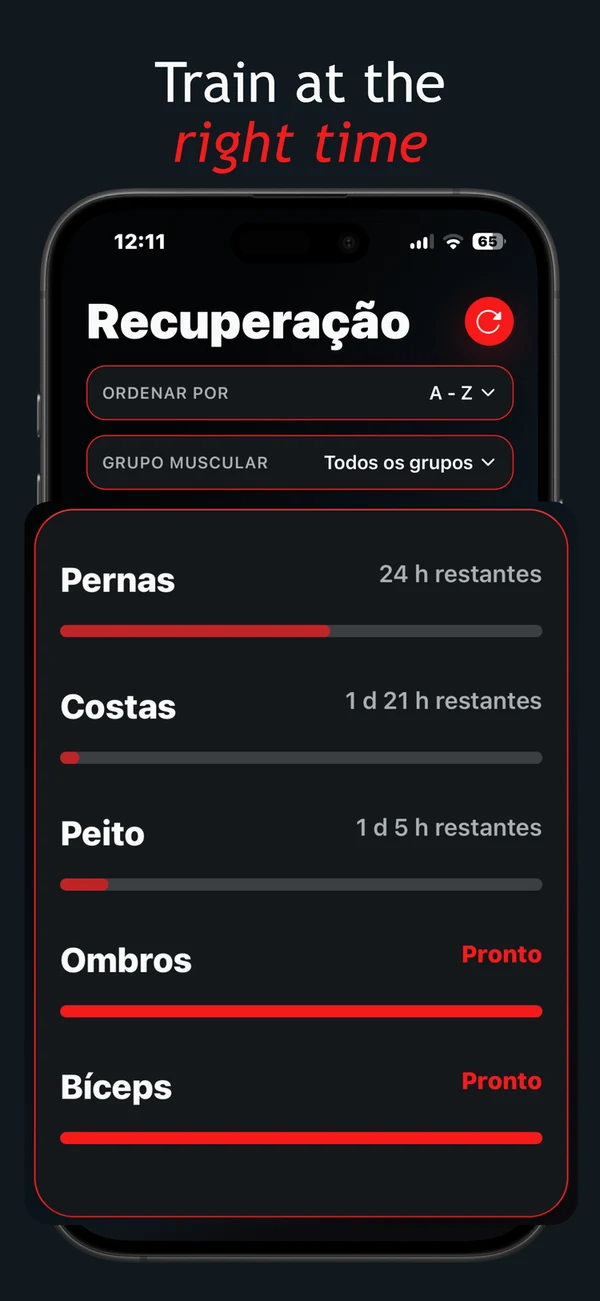
Forma logs workouts and estimates recovery from recorded activity. Use it as a planning aid alongside your symptoms and training context; it cannot diagnose pain or clear you to train.
Explore FormaFrequently asked questions
Can I work out when I am sore?
It depends on how you feel and what the session involves. Consider movement quality, range of motion, energy and whether the exercise creates pain rather than ordinary soreness.
Should I train a different muscle group?
That can be reasonable if the planned movement feels comfortable and the rest of your body is ready.
When should I stop training?
Stop for sharp or unusual pain, worsening symptoms, loss of control or anything that concerns you, and seek qualified advice when appropriate.