How long do muscles take to recover?
Muscle recovery depends on the workout, training experience, sleep and symptoms. A rest day between strength sessions for the same muscle group is a general starting point, not a readiness test. Use several signals when planning the next session.
I develop Forma, which is mentioned in this guide.
In this guide
What changes recovery time?
Recovery depends on the work you did and the person doing it. Training volume, intensity, exercise selection, sleep, food, stress, training experience and your current health all matter. A muscle group can feel different from one week to the next, so a fixed calendar is only a starting point.
Use more than soreness as a signal
Delayed soreness can be useful context, but it is not a complete readiness test. Before repeating a hard session, consider your range of motion, control, energy and whether you can perform the movement with your usual technique. Sharp pain, unusual weakness or symptoms that worry you are reasons to stop and seek qualified medical advice.
A practical way to adapt today’s workout
- Review which muscle groups you trained recently and how demanding those sessions were.
- Compare that history with how the relevant movement feels during a careful warm-up.
- If the area feels ready, train as planned; if not, reduce the load or volume, choose another muscle group, or take recovery time.
- Record what you chose so the next decision has better context.
A calendar is only one signal
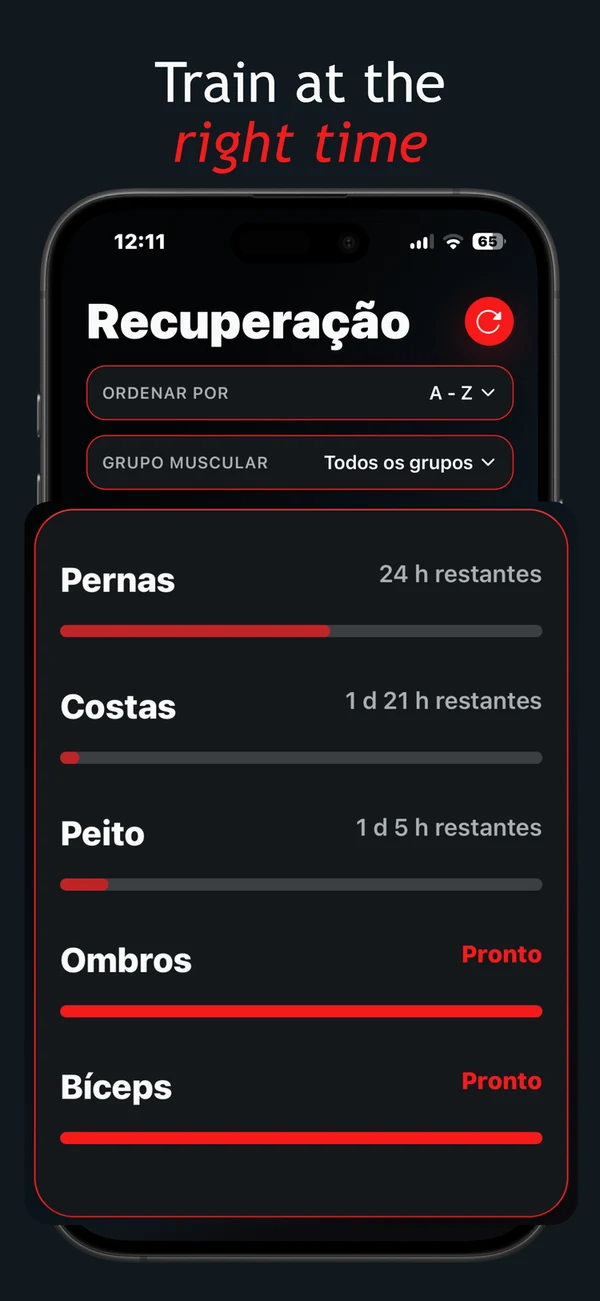
Illustrative case: you trained legs on Monday and planned another session on Wednesday. The elapsed time is useful context, but it does not settle readiness. Consider symptoms, energy and comfortable movement before loading the same exercises again. A different workout or rest may fit better. Forma estimates recovery from logged training; it does not measure tissue repair or provide medical clearance.
Limits and warning signs
This is general information, not an individual assessment. Stop for sharp, unusual or worsening pain. Severe muscle pain, weakness or dark urine after exertion need immediate medical attention. Persistent fatigue or falling performance can have causes beyond the training schedule; seek qualified advice rather than relying on an app estimate.
Keep a training log
Forma logs workouts and estimates recovery from recorded activity. Use it as a planning aid alongside your symptoms and training context; it cannot diagnose pain or clear you to train.
Explore FormaFrequently asked questions
What affects muscle recovery?
Training volume and intensity, the muscle group involved, sleep, nutrition, stress, training experience and individual circumstances can all affect how recovered you feel.
Should I train when I am sore?
Soreness alone does not answer that question. Consider your range of motion, technique, energy and whether the planned movement feels appropriate; reduce or change the session if it does not.
Can a workout plan adapt to recovery?
Yes. Keep a record of recent sessions by muscle group and use it alongside how you feel to choose between a planned workout, a lighter session or a different focus.