How a study planner can choose your next session
A study planner is most useful when it turns a large plan into a clear next task. Here is what to check before trusting a study session recommendation—and how to keep the decision yours.
I develop Vitae, which is mentioned in this guide.
In this guide
What information should a study planner use?
Start with the inputs that change the schedule: subjects, exam dates, time you can study, session length and a realistic weekly target. A planner should make it easy to correct these when a class, shift or deadline changes. If it suggests a session without showing which inputs matter, you cannot tell whether the suggestion still fits your week.
Look for a reason, not just a subject name
A useful recommendation explains why the task is next. It might prioritize an approaching exam with unfinished target hours, a planned session that has not started, or a subject you have not studied recently. These are planning rules, not proof of what you have learned. Use practice questions and your own understanding to decide whether the suggested topic is still the right one.
Make the task small enough to begin
“Study biology” is hard to start. “Recall the cell cycle from memory, then check three missed questions” gives the session a boundary. Choose a task that fits the time available, and leave a note about what should happen next. A timer can help protect the block, but it cannot make an unfocused task effective.
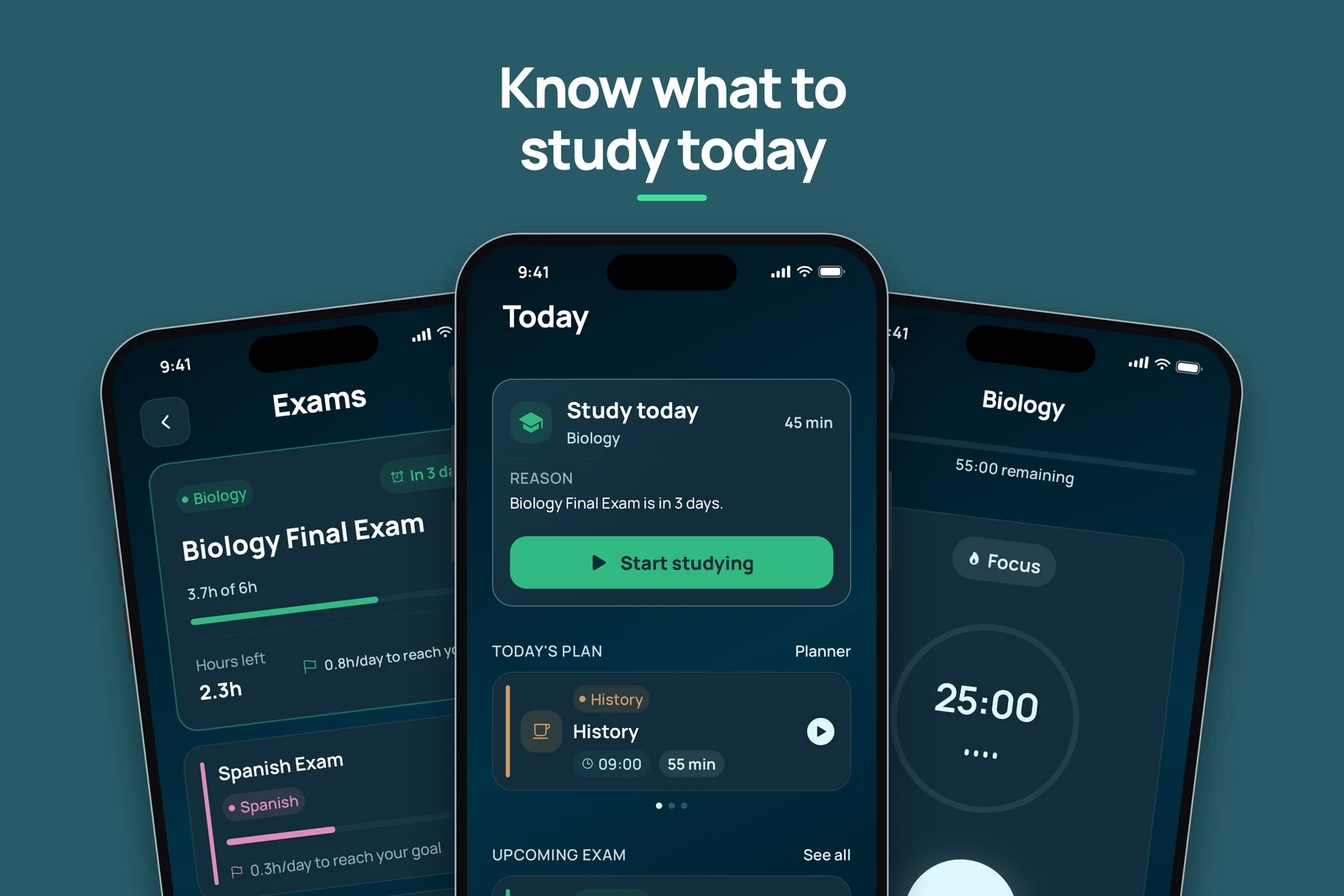
See a recommendation with its reason
Vitae builds a study week from subjects, exam dates and availability, then recommends a session and shows the rule behind it. It is a fixed planning system, not an AI assessment of what you know. Review the reasoning and change the session whenever your actual needs differ.
A quick checklist before starting
- Is the exam date or weekly target current?
- Does the suggested subject match your recent practice errors?
- Can you state one concrete outcome for this session?
- Can you finish it in the time you actually have?
If the answer to the second question is no, choose a better task. A planner helps organize effort; your practice results remain the best guide to what needs work.
Frequently asked questions
Can a study planner know which topics I have mastered?
A planner can organize the information you enter and show your activity, but it cannot establish understanding by itself. Use recall and practice questions to check what you know.
What should a study session recommendation explain?
It should show which schedule details or planning rule made the task next, so you can check the recommendation and change it if your needs differ.
Should I follow every suggested session?
No. Treat a suggestion as a starting point. Recent errors, an upcoming assignment or a change in your schedule may make another task more useful.