How to know what to study today
Decide what to study today from your next deadlines, recent practice errors and available time. Choose one task you can finish in the current session. Vitae can suggest a session, while the assessment of your understanding remains yours.
I develop Vitae, which is mentioned in this guide.
In this guide
Check deadlines and readiness together
List the next deadlines and identify what remains difficult from recent exercises. The nearest exam is not automatically the highest priority: an already-prepared topic may need less time than a later exam with major gaps.
Choose a task that fits the available time
Illustrative case: you have 30 minutes, a biology exam in six days and a mathematics exam in eight. Biology recall is already reliable; you missed several algebra questions yesterday. Choose one algebra problem type, attempt three questions without notes and correct the errors. Keep a short biology review for another block. This is an example, not a universal allocation.
Use hours as a planning signal
A weekly target helps you distribute effort. It cannot tell you that a topic is learned. Keep completed tasks and practice errors alongside the time record; change the plan when these disagree.
How Vitae makes suggestions
Vitae uses rules over your subjects, targets and exam dates, including a ten-day window for near exams. This is a product heuristic, not a scientifically established threshold. Read the reason shown, then choose a different session if your current needs call for it.
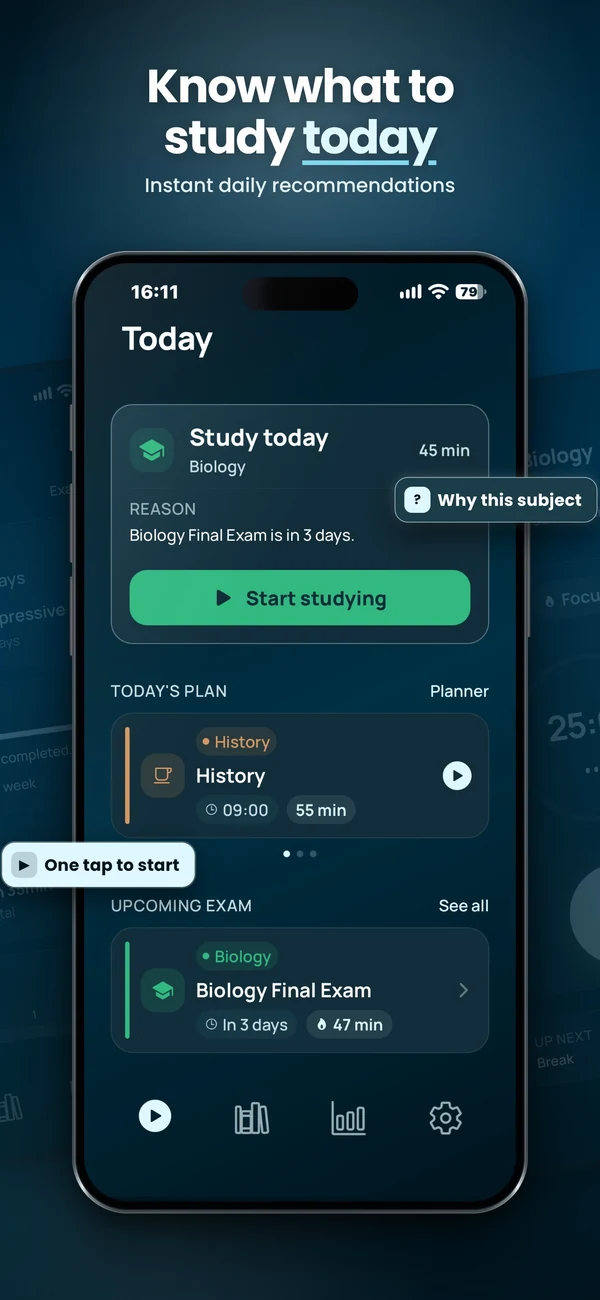
Plan and run a study session
Vitae brings subjects, exams, weekly planning and timed sessions together on iPhone. Core planning features are free, with an optional one-time Premium unlock.
Explore VitaeFrequently asked questions
Should I always study for the nearest exam?
No. Consider both the date and your readiness. A later exam with serious gaps can deserve the next available block.
Does Vitae know which topics I have mastered?
No. Its recommendations use the data you enter and recorded activity. Use practice results to judge understanding.