How to track expenses while traveling
Record each travel expense in its original currency, assign a category and compare the converted total with your remaining budget. Review spending regularly and avoid counting cash withdrawals or shared bills twice.
I develop TravelBudget, which is mentioned in this guide.
In this guide
Choose one reference currency
Set the overall trip budget in a currency you understand well. This gives you one number to compare against, even when you cross borders. Keep the original amount and currency for every expense too: it preserves what was actually charged and makes mistakes easier to spot.
Record expenses while they are fresh
A small purchase is easy to forget by the end of the day. Add the amount, currency, category and a short note soon after paying. Useful categories might include accommodation, food, transport, activities and fees. Keep the list simple enough that recording an expense takes less time than postponing it.
Separate fixed and flexible spending
Flights and pre-booked accommodation are different from meals, taxis and optional activities. Tracking them separately shows which parts of the budget can still change. If flexible spending is running high, you can adjust future choices without pretending that a cost you already paid can be recovered.
Review the budget during the trip
Compare your remaining budget with the days and commitments left. Look for trends rather than judging one expensive day in isolation. A museum ticket or long train journey may be intentional; the important question is whether the whole trip is still on a path you accept.
Use a tool that handles currencies
A spreadsheet can work, but manual conversion adds friction when you are tired or offline.
Avoid counting cash and shared bills twice
Suppose you withdraw €100 and later spend €15 of that cash on lunch. The withdrawal is a transfer into your cash wallet; the lunch is the expense. Counting both as spending inflates the total. Similarly, if you pay €60 for two people, distinguish the €60 cash outflow, your €30 share and the €30 reimbursement due. Add a separate bank fee only if it is not already included in the recorded amount.
Follow your travel budget
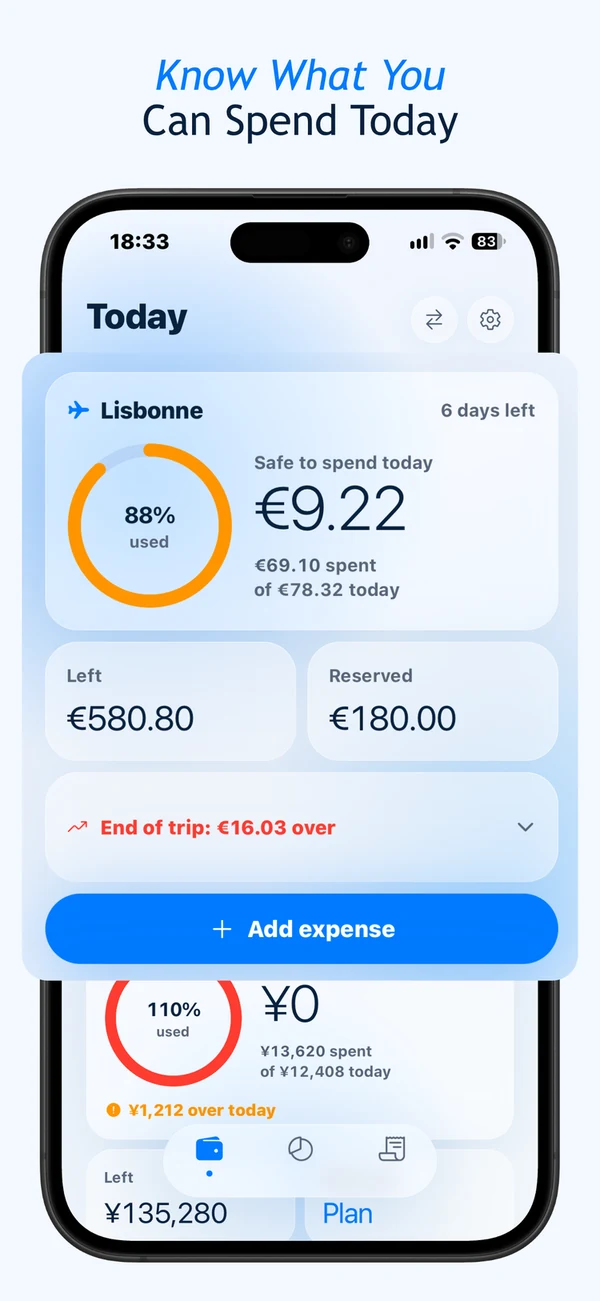
TravelBudget helps track expenses and estimate daily spending room on iPhone, including offline use. Check how planned costs and saved exchange rates affect your figures.
Explore TravelBudgetFrequently asked questions
Should I record expenses immediately?
Yes. Recording an expense soon after it happens reduces forgotten purchases and makes it easier to remember the category and currency.
Which currency should I use for my budget?
Use one reference currency for the overall budget, while recording each purchase in the local currency in which it was charged.
How do I track shared travel expenses?
Record the full expense, note who paid and who benefited, then settle balances at a convenient point rather than splitting every transaction immediately.